AESC and Prevalon Energy Sign 10+ GWh Strategic Supply Agreement to Support Global Energy Storage Growth
SHANGHAI, June 13, 2026 /PRNewswire/ -- AESC, a global leader in high-performance batteries and energy storage systems, and Prevalon Energy, a Mitsubishi Power Americas and EES joint venture, announced a strategic supply agreement.
Under the agreement, AESC will supply battery cells and modules utilized within the Prevalon Energy Storage Platform, supporting more than 10 GWh of utility-scale energy storage deployments over the next three years. The partnership comes as demand for battery energy storage continues to accelerate across utility-scale renewable integration, grid reliability applications, and emerging data center power infrastructure requirements.
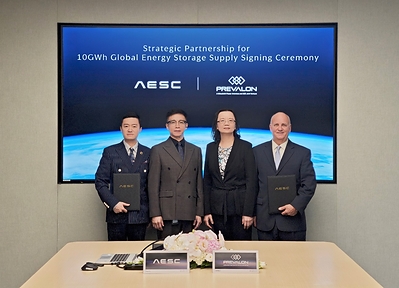
Edward Hou, Senior Vice President at Envision Energy said: "The scale of this agreement underscores the surging global demand for reliable, high-performance energy storage. Together with Prevalon, we are committed to supporting the next generation of power infrastructure with safe, intelligent, and sustainable energy storage solutions."
The agreement will support deployments across the Prevalon Energy Storage Platform, including HD5™ DC, HD5™ AC, and Hybrid Power Stabilizer (HPS) solutions serving utility-scale energy storage, renewable integration, data center power infrastructure, and other critical energy applications.
By combining AESC's advanced battery technology, global manufacturing footprint, and proven large-scale delivery capability with Prevalon's system integration expertise and global project experience, the partnership will help deliver stable, efficient, and sustainable energy storage solutions for AI data centers, grid-scale applications, and other critical power infrastructure worldwide.
About Prevalon Energy
Commitment, reliability, expertise. These are the ideals that guide our decision making, design philosophy, and relationship building. Prevalon® Energy LLC (Prevalon), a Mitsubishi Power Americas and EES joint venture, is empowering companies to deploy flexible energy solutions and accelerate a more sustainable energy future. With over 35 projects and 6+ GWh of utility-scale global battery energy storage deployed, Prevalon delivers end-to-end integrated battery energy storage solutions that ensure performance throughout the entire project lifecycle. From design and engineering, energy management systems integration, commissioning, and long-term service programs, the Prevalon Battery Energy Storage Platform meets the demands of your energy system today and into the future. For more information, visit PrevalonEnergy.com and follow us on LinkedIn.
About AESC
AESC is a global leader in high-performance batteries and energy storage systems. Founded in Japan in 2007, the company operates gigafactories across Japan, China, the United States, the United Kingdom, France, and Spain. To date, AESC has delivered over 100 GWh of energy storage cells across more than 400 projects in over 20 countries.
In the energy storage sector, AESC has pioneered early mass production of BESS large-capacity cells exceeding 300Ah, 500Ah, and 700Ah, demonstrating clear technological leadership. Its full energy storage cell portfolio is certified under major global safety and compliance frameworks including UL, IEC, and JIS. For more information, visit aesc-group.com/ and follow us on LinkedIn.
 View original content to download multimedia:https://www.prnewswire.co.uk/news-releases/aesc-and-prevalon-energy-sign-10-gwh-strategic-supply-agreement-to-support-global-energy-storage-growth-302799616.html