BofA's CashPro App facilitates more than €100 billion in payments approved European companies
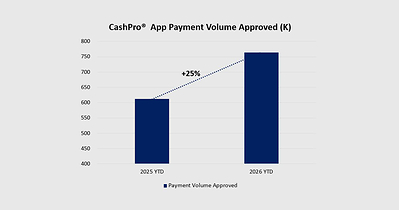
European clients increasingly rely on mobile treasury tools, with payment volumes rising 25% in the first seven months of 2026
- Mobile treasury usage has reached mainstream adoption across Europe.
- Clients increasingly view security and convenience as complementary, not competing, priorities.
- Direct client feedback continues to guide enhancements to the CashPro® App.
LONDON and BARCELONA, Spain, Sept. 17, 2026 /PRNewswire/ -- European companies are increasingly turning to Bank of America's CashPro App to manage time-sensitive treasury tasks. In the first seven months of 2026, clients in the region used the app to approve more than €100 billion in payments, as transaction volume rose 25% and payment value increased 21%[1].
The shift reflects how mobile access is becoming embedded in corporate treasury workflows, particularly for secure authentication and payment approvals. Bank of America has continued to expand the app's functionality and simplify its design so treasury teams can complete more tasks securely from a mobile device.
Mobile becomes the preferred way to access CashPro
CashPro mobile token, Bank of America's mobile authentication solution, replaces the need for a physical token. Together with biometrics, QR Sign-In and push authentication, it enables corporate treasury users to access CashPro and approve transactions securely from their mobile devices.
Across Europe, 74% of CashPro users now choose a CashPro mobile token as their preferred way to authenticate and access the platform, underscoring the growing role of the app in day-to-day treasury management.
"Mobile is an integral part of the daily treasury workflow, giving clients the flexibility to manage critical tasks securely wherever they are," said Matthew Davies, head of Global Payments Solutions EMEA at Bank of America. "The fact that 74% of CashPro users in Europe now choose the app as their preferred security token demonstrates how firmly mobile has become embedded in day-to-day treasury and cash management."
Client feedback shapes the payment approval experience
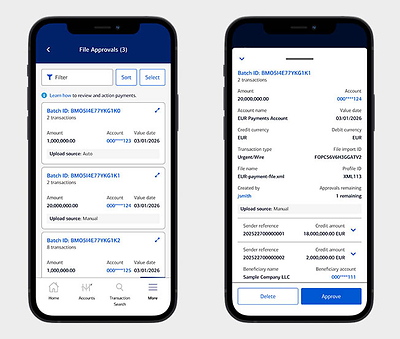
As clients conduct more business through the app, Bank of America recently enhanced the payment approval experience to provide greater visibility into payment details and make approvals more efficient.
The updates were informed by direct input from clients, including those who participate in the bank's CashPro Boards.
"Moving from a physical token to the CashPro App was a natural step for us," said Kunwarjit Singh Suri, EMEA Controller at F5 Limited and a member of the bank's UK CashPro Board. "It gives us the security we need while making it easier to review and approve transactions wherever we are. The new payment approval process is another nice touch making it easier for us to review and approve payments."
Extending secure mobile access
Bank of America is developing new digital identity verification capabilities for corporate administrators, building on the app's cybersecurity protections and patented integrated mobile token.
"Clients around the globe have embraced mobile and continue to ask us to expand what they can accomplish through the app," said Heath Bergman, CashPro App Product Executive at Bank of America. "Their feedback is helping shape our investment as we extend secure mobile access to more treasury workflows."
Frequently asked questions
Question: What is CashPro?
Answer: CashPro is Bank of America's flagship digital platform used by more than 35,000 companies around the globe to manage and monitor their payments, deposits, loans and trade transactions. Through a single, unified experience, CashPro connects companies and institutions to one of the world's largest banking networks – helping them move faster, operate with greater control, and make smarter cash and liquidity decisions globally.
Question: How does CashPro compare against peer offerings?
Answer: For four consecutive years, the CashPro App has been the No. 1 ranked mobile application according to Coalition Greenwich. The broader CashPro platform has also been ranked:
- No. 1 (tied) – Overall Leadership in Digital Channels, fourth consecutive year
- No. 1 – Online Portal Overall
- No. 1 – Host-to-Host (tied)
- No. 2 – TMS and ERP integrations
Question: Does CashPro use AI technology?
Answer: Yes. CashPro uses AI technology in the following ways:
- CashPro Chat is a virtual assistant built with Bank of America's AI-driven Erica technology. Clients use the tool to access account information, for transaction tracking and service resolution.
- CashPro Capital Markets Insights uses an AI-driven algorithm leveraging market variables that produces a TED score – an objective way to quantify the macro backdrop that clients, the debt issuers, are faced with prior to deciding the viability of an investment-grade issuance on a given day.
- CashPro Forecasting is an AI-driven data intelligence tool that automatically integrates account data and applies machine learning to analyze global cash positions, generate accurate forecasts, and deliver actionable insights—all within minutes.
Question: What is the CashPro Board?
Answer: CashPro Boards are client advisory groups made up of CashPro users from different client segments and geographic regions. Their purpose is to provide feedback that helps shape the future of CashPro development, investment priorities, and user experience.
Question: What is coming to the CashPro App?
Answer: A new digital identity verification experience for corporate administrators is in development. The update will build on the app's inherent cybersecurity protections and patented integrated mobile token.
Bank of America
Bank of America is one of the world's leading financial institutions, serving individual consumers, small and middle-market businesses and large corporations with a full range of banking, investing, asset management and other financial and risk management products and services. The company provides unmatched convenience in the United States, serving more than 69 million clients with approximately 3,500 retail financial centers, approximately 15,000 ATMs (automated teller machines) and award-winning digital banking with approximately 60 million verified digital users. Bank of America is a global leader in wealth management, corporate and investment banking and trading across a broad range of asset classes, serving corporations, governments, institutions and individuals around the world. As the #1 small business lender in the United States (FDIC), Bank of America offers industry-leading support to approximately 4 million small business households through a suite of innovative, easy-to-use online products and services. The company serves clients through operations across the United States, its territories and more than 35 countries and/or jurisdictions. Bank of America Corporation stock (NYSE: BAC) is listed on the New York Stock Exchange.
For more Bank of America news, including dividend announcements and other important information, visit the Bank of America newsroom and register for news email alerts.
Reporters may contact
Megan Pearson, Bank of America
Phone: +44 207 995 6977
megan.n.pearson@bofa.com
1 Same Period Previous Year (SPPY)
 View original content to download multimedia:https://www.prnewswire.co.uk/news-releases/bofas-cashpro-app-facilitates-more-than-100-billion-in-payments-approved-european-companies-302881220.html