LONGi Tops Wood Mackenzie's Global Solar PV Module Manufacturer Ranking, Earns "Grade A" Highest Rating
XI'AN, China, June 24, 2026 /PRNewswire/ -- On June 2, Wood Mackenzie, one of the world's most authoritative energy consultancies, officially released its 2026 Global Solar PV Module Manufacturer Ranking (based on 2025 operational data) and Supplier Qualification Program results. Driven by its leading technological innovation and deep global market recognition, LONGi claimed the No. 1 position among 48 manufacturers from 10 countries, while simultaneously achieving the highest "Grade A" rating in the Supplier Qualification Program.
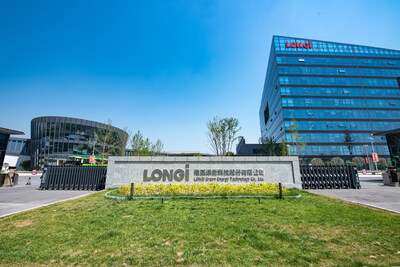
Behind this achievement lies Wood Mackenzie's exceptionally rigorous evaluation framework. The assessment spans ten core dimensions, including capacity utilization, technology maturity, financial health, supply chain resilience, ESG, reliability standards, and R&D investment – regarded by major global investors and financial institutions as a credit-grade benchmark for procurement and financing decisions.
Notably, Wood Mackenzie's Grade A rating is the highest level in its Supplier Qualification Program, providing an independent reference for procurement teams, project developers, and asset owners. Manufacturers must meet at least five benchmark criteria established by Wood Mackenzie, which reflect best practices among leading global suppliers. LONGi's achievement of the Grade A rating means it has reached the industry's pinnacle in risk resilience, long-term reliability, and technology leadership – according to Wood Mackenzie's assessment methodology, LONGi is recognized as a low-risk, high-reliability strategic partner worthy of global market trust.
Yana Hryshko, Head of Solar Supply Chain Research at Wood Mackenzie, noted: "Chinese manufacturers continue to lead globally on manufacturing scale, technology advancement and operational efficiency." Among the top ten manufacturers, nine are headquartered in China, further consolidating the country's continued dominance across the global solar supply chain. As a frontrunner among them, LONGi's No. 1 ranking once again proves that sustained technological innovation is the decisive force shaping the competitive landscape – and the source of that force lies in LONGi's dual leadership in both R&D and mass production.
LONGi's independently developed HIBC solar cell, certified by Germany's Institute for Solar Energy Research Hamelin (ISFH), achieved a record-breaking 28.13% conversion efficiency for single-crystalline silicon cells. Meanwhile, in the April 2026 edition of TaiyangNews' commercial module efficiency rankings, LONGi's EcoLife series – built on HIBC technology – claimed the top spot with a mass production efficiency of 25%. With record-breaking advances in the lab and reliable value delivery at scale, LONGi's BC technology is reshaping the technology benchmark of the module market through a powerful dual engine.
Technological heights ultimately translate into product breadth. Centered on safety, reliability, ultimate efficiency, and pure black aesthetics, LONGi's BC technology has formed a comprehensive, all-scenario BC product portfolio. The company has taken the lead in developing and launching functional products such as anti-dust, anti-glare, lightweight, and specialized fire-resistant modules, as well as scenario-specific modules designed for extreme environments including sandy and barren land, offshore applications, and hail‑prone regions. LONGi's differentiated product matrix built around BC technology is enabling users across different scenarios and with diverse needs to benefit from this leading technology.
Customer-value-driven technological innovation is translating into the market competitiveness to navigate industry cycles. Being ranked No. 1 in Wood Mackenzie's global ranking and earning the Grade A Supplier Qualification reaffirms a simple yet profound truth: in an era of growing uncertainty, commitment to technological innovation is the most reliable strategic anchor – and the very foundation for earning the enduring trust of global customers.
Photo - https://mma.prnewswire.com/media/2999457/DSC_0614.jpg
Logo - https://mma.prnewswire.com/media/1606520/LONGi_Logo.jpg
 View original content:https://www.prnewswire.co.uk/news-releases/longi-tops-wood-mackenzies-global-solar-pv-module-manufacturer-ranking-earns-grade-a-highest-rating-302808884.html