Sungrow Unveils PowerStack 255CS Series for C&l: Stable, Seamless, Sustainable
MUNICH, June 25, 2026 /PRNewswire/ -- Sungrow, the globally leading PV inverter and energy storage system provider, launched its C&I PowerStack On&Off-Grid Solar-Storage solution at Intersolar Europe.
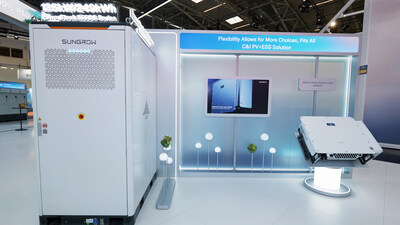
As electricity prices rise and grid reliability becomes an increasing concern worldwide, businesses are looking for solutions that can ensure continuous power supply while supporting their decarbonization goals. Sungrow's C&I PowerStack On&Off-Grid Solar-Storage solution is designed to meet these needs through flexible system configuration and multi-scenario adaptability, delivering stable and efficient power support for commercial and industrial users. The solution also supports multiple operation modes, including VPP, demand control, VSG, backup power, seamless switching, and black start, enabling strong adaptability across diverse grid conditions and operational requirements.
Two Architectures for Different Customer Needs
-DC-Coupled: Native All-in-One Seamless Backup
The DC-coupled solution combines the SH125CX hybrid inverter with the ST245CS-S energy storage system. Solar, battery storage, and diesel generation operate as one integrated energy system, enabling seamless transitions between grid-connected and off-grid operation.
For facilities with power demands of up to 250 kW, the solution eliminates the need for an additional automatic transfer switch (ATS) cabinet, reducing upfront investment and simplifying system design. Solar energy can also charge the battery directly, improving overall system efficiency and maximizing renewable energy utilization.
-AC-Coupled: Independent & Flexible Seamless Backup
Combining the SG series PV inverter with ST255CS storage and ATS1250, the system seamlessly takes over loads on grid failure; during extended outages, the diesel generator can be commanded to start and synchronize smoothly. The storage system integrates with existing PV systems through plug-and-play installation, requiring no modifications and keeping retrofit costs low.
New facilities benefit most from DC-coupled architecture for its superior cost-efficiency and existing facilities are best served by AC-coupled architecture for its minimal retrofit investment. The optimal solution depends on each customer's energy requirements and infrastructure.
Full Scenario Coverage Across C&I Applications
The solution is designed for wide-ranging applications, covering on-grid, on&off-grid, and off-grid scenarios. It supports deployment in commercial buildings such as retail shops and offices, as well as agriculture facilities, logistics hubs, and island resort standalone power systems.
Its versatility has been demonstrated in diverse real-world scenarios, from a fully off-grid sawmill in South Australia to weak-grid applications in Cambodia. Across different infrastructure environments, Sungrow's solution helps customers maintain critical power, reduce diesel reliance and build more sustainable operations.
Delivering Tangible Customer Value
- Power stability: seamless on&off-grid switching with MW-level black-start capability for reliable and continuous operation
- Full application coverage: scalable from a single unit to multi-cabinet systems, serving C&I buildings, islands, agriculture, logistics, and resorts
- High return: reduce peak demand charges, optimize self-consumption and reduce diesel usage
- Ultimate convenience: simple O&M and real-time management via iSolarCloud, ensuring smooth operation even in remote areas
- Cell-to-plant security: proactive risk early warning, three-tier overcurrent protection, three-tier fire suppression, and greater peace of mind
As the global energy transition accelerates, On&Off-Grid Solar-Storage is shifting from "nice-to-have" to "must-have." Sungrow remains committed to delivering innovative clean energy solutions, empowering customers worldwide with stable, secure, and convenient green power.
CONTACT:
Luly Wang
luly.wang@sungrow-hq.com
+86 15618330862

Photo - https://mma.prnewswire.com/media/3000237/000000_255CS.jpg
Logo - https://mma.prnewswire.com/media/1344575/Logo.jpg
 View original content:https://www.prnewswire.co.uk/news-releases/sungrow-unveils-powerstack-255cs-series-for-cl-stable-seamless-sustainable-302810151.html