Waters Sets Benchmark for Standardized Spectral Flow Cytometry with Commercial Launch of BD FACSDiscover A7 Cell Analyzer
- Enables routine 50+ parameter experiments with BD SpectralFX™ Technology, accelerating breakthrough discoveries in the fight against cancer and other diseases.
- Minimizes instrument and user differences with first-of-its-kind FACSTruQ™ Technology, achieving industry-leading standardization for greater confidence in results.
- Integrated autoloader and BD FACSChorus™ Software speeds time to insight for new and experienced users.
MILFORD, Mass., Sept. 14, 2026 /PRNewswire/ -- Waters Corporation (NYSE: WAT) today announced the global commercial launch of the BD FACSDiscover™ A7 Cell Analyzer, which uniquely combines exceptional spectral resolution and sensitivity with industry-leading standardization and ease-of-use features, making the power of advanced flow cytometry more accessible to researchers in academia and pharmaceutical settings, as well as in contract research organization (CRO) labs.
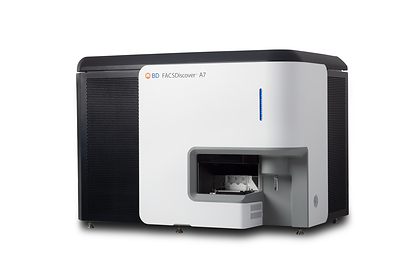
The new cell analyzer expands Waters' category-defining FACSDiscover platform of flow cytometers, incorporating the same cutting-edge BD SpectralFX Technology present in the flagship BD FACSDiscover A8 Cell Analyzer, which supports up to five lasers and 78 fluorescence detectors to maximize the palette of colors. This technology enables scientists to analyze more than 50 characteristics of a single cell with consistent, high-quality data.
Together with FACSTruQ Technology, a notable product innovation that delivers next-generation instrument calibration with automated setup and quality control, the cell analyzer provides data consistency across instruments, users, and sites, achieving highly reproducible results with a less than 10% coefficient of variation across a palette of more than 50 dyes.1 Paired with the BD FACSChorus Software's guided workflows and the integrated autoloader, the FACSDiscover A7 Cell Analyzer sets a new standard for experimental standardization in flow cytometry.
"The FACSDiscover A7 Cell Analyzer lowers the barrier to advanced spectral flow cytometry and will open up new possibilities for immunology research, enabling our core facility to help scientists uncover deeper biological insights with greater standardization and confidence," said Cheryl Kim, Senior Director, Flow Cytometry Core, La Jolla Institute for Immunology. "We look forward to the FACSDiscover A7 Cell Analyzer being an integral instrument for our core, allowing our researchers to get the most out of spectral data to advance our important work of improving human health through the development of treatments and cures for immune system disorders."
Steve Conly, Senior Vice President, Waters Biosciences, Waters Corporation, added, "The FACSDiscover A7 Cell Analyzer couples advanced spectral performance and leading standardization with a compelling price-to-performance balance, bringing spectral flow cytometry within reach of more researchers than ever before, for applications from biomarker discovery to drug development. Just two years after the world's very first 50-color flow cytometry panel was developed on the BD FACSDiscover™ S8 Cell Sorter,2 the FACSDiscover A7 Cell Analyzer extends these transformative capabilities, helping labs meet their increasingly critical needs for reproducibility within our connected ecosystem of instruments, reagents, and informatics."
The FACSDiscover A7 Cell Analyzer is now commercially available globally and available to order through local representatives. For more information, please visit waters.com and bdbiosciences.com/A7.
BD is a trademark of Becton, Dickinson and Company. Waters is a trademark of Waters Corporation or its affiliates. All other marks are the property of their respective owners.
About Waters Corporation:
Waters Corporation (NYSE: WAT) is a global leader in life sciences and diagnostics, dedicated to accelerating the benefits of pioneering science through analytical technologies, informatics, and service. With a focus on regulated, high-volume testing environments, our innovative portfolio harnesses deep scientific expertise across chemistry, physics, and biology. We collaborate with customers around the world to advance the release of effective, high-quality medicines, ensure the safety of food and water, and drive better patient outcomes by detecting diseases earlier, managing routine infections, and combating antibiotic resistance. Through a shared culture of relentless innovation, our passionate team of ~15,000 colleagues turn scientific challenges into breakthroughs that improve lives worldwide. For more information, please visit www.waters.com/about.
Disclaimer:
The BD Biosciences and BD Diagnostic Solutions businesses have been acquired by Waters Corporation ("Waters"). Becton, Dickinson and Company or one of its affiliates or subsidiaries ("BD") remains the legal manufacturer of Biosciences and Diagnostic Solutions products until all required regulatory transfers are completed. During this interim period, BD maintains full responsibility for all regulatory obligations of the legal manufacturer. Product information provided here is supplied under BD's regulatory authority. To learn more about the relationship between Waters and BD during this transition period, please see our detailed summary: www.waters.com/bdtransaction.
References:
1) Internal Waters data comparing the BD FACSDiscover™ A7 Cell Analyzer with the BD FACSLyric™ Flow Cytometry System and publicly available data for comparable instruments.
2) Konecny AJ, Mage PL, Tyznik AJ, Prlic M and Mair F. OMIP-102: 50-color phenotyping of the human immune system with in-depth assessment of T cells and dendritic cells. Cytometry Part A 2024; 105:430-436. DOI: 10.1002/cyto.a.24841
Contact:
Molly Gluck
Head of External Communications
Waters Corporation
+1.508.498.9732
molly_gluck@waters.com

 View original content to download multimedia:https://www.prnewswire.co.uk/news-releases/waters-sets-benchmark-for-standardized-spectral-flow-cytometry-with-commercial-launch-of-bd-facsdiscover-a7-cell-analyzer-302877244.html


